Table of Contents
(And What No One Tells You Until You’re in the Chair)
Sinus lift for dental implants: no one really expects to need one. You walk into the office thinking, “Okay, I’m finally doing this. Getting my implants. Let’s go.” Then your dentist glances at your X-rays and goes, “Hmm… we’ll need to do a sinus lift first.”
Wait, what?
If you’ve had that moment or you’re wondering if it’s something you might face, you’re not alone. It’s one of those lesser-known steps in the dental implant journey, and honestly, it sounds a lot scarier than it is.
1. It’s not as scary as it sounds
“Sinus lift” sounds intense, right? Like something that involves your face being turned upside down.
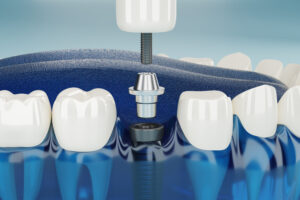
But here’s what’s really going on: your upper back teeth (usually the molars) sit super close to your sinus cavity. When you lose one of those teeth, the bone underneath can shrink over time. That leaves very little support for a dental implant.
A sinus lift is a way to gently lift the sinus membrane and add bone underneath so there’s a strong foundation for your new implant.
It’s precise. It’s done carefully. And with local anesthesia and expert hands (like ours here at Montana Center for Implants and Dentures), you’ll be just fine.
2. You might need one if you’ve been missing a tooth for a while
This isn’t about what you did “wrong.” Bone loss just happens when a tooth’s been missing for some time—especially in the upper jaw.
Think of it like this: bone stays strong when it has a job. No tooth = no job = bone slowly fades away.
If Dr. Muir or Dr. Townsend recommends a sinus lift, it just means we’re making sure the implant has enough solid support to last you for years to come.
3. It adds a little time to the process—but it’s worth it
This part trips people up. You’re ready for implants now, but a sinus lift might mean you need to wait a few months before we place them.
That’s because bone needs time to heal and grow into place. Usually, we’re looking at 4–6 months of healing after the lift. Then we move forward with your implants.
It’s a bit of a pause, but skipping it can lead to implant failure. And no one wants that.
4. The recovery is surprisingly manageable
Here’s what recovery doesn’t feel like: a broken nose, a cracked skull, or anything that horror stories online might suggest.
Here’s what it does feel like: you might be a little swollen, you’ll need to avoid blowing your nose for a bit, and you’ll want to take it easy for a few days. That’s it.
Most patients say it’s less uncomfortable than they expected. Read our sinus lift post-op instructions for a better idea of what recovery looks like.
5. Not everyone needs a sinus lift
Don’t panic yet. Just because you’re getting upper implants doesn’t automatically mean a sinus lift is in your future.
We’ll take 3D scans to see exactly how much bone is available. Some people still have plenty of bone left—even after years without a tooth.
But if you do need it, we’ll walk you through it step by step. No surprises.
6. There are different ways to do it—and we pick the gentlest option
Some sinus lifts are “open” (slightly more involved), and others are “closed” (less invasive and done during the implant placement). Which one you get depends on how much bone we need to add.
At Montana Center for Implants and Dentures, we use advanced tools to plan your procedure with pinpoint accuracy. It’s like GPS for your mouth. That way, we can use the least invasive technique possible and make sure everything heals just right.
7. It’s the foundation for something amazing
No one’s excited about needing extra procedures. But here’s the bigger picture:
This one step can be the thing that finally lets you smile again, eat without worry, and ditch the dentures for good.
If you’ve been putting off implants because of bone loss or sinus concerns, don’t. There are real solutions. And we’re right here to help you through them.
Sinus Lift For Dental Implants: Let’s Talk About Your Options
Whether you’re just starting to explore dental implants or you’ve been told you might need a sinus lift for dental implants, we’re here to answer every question.
At Montana Center for Implants and Dentures, this is what we do. Every day, we help people get their smile—and their life—back.
Schedule a consultation today and let’s figure out the right path forward together. No pressure. Just answers.